
Faire is the fourth most commonly used verb in French, so it’s a must-learn verb for you. It mainly means ‘to do’ or ‘to make’ but it has different meanings too at different times.
Faire is used in many phrases you might like to use when talking about your leisure activities or what you do in the home, as well as in some idiomatic phrases and when talking about some weather conditions.
In this article, you’re going to learn about the Faire conjugation, some of the more common uses of this verb, and there is a short quiz at the end to help you remember some of the key parts and uses of the verb.
Uses of Faire
Faire is an irregular verb, so it doesn’t follow a particular pattern when you conjugate it. The good news, though, is that it isn’t too irregular. Regarding the two different meanings of the verb, sometimes it is obvious whether it means ‘to do’ or ‘to make’ and sometimes it doesn’t matter. And yes, sometimes, it doesn’t translate directly to either meaning.
Faire is used in three different ways.
-
1
In its simplest sense, it tells you what is being done or made. Exemple: Elle fait ses devoirs (She’s doing her homework). This will include talking about some – but not all – of your household activities. Example: Je fais le ménage (I do the housework) and Il fait la vaisselle (He does the washing up). Also, you’ll use it to talk about some of your leisure activities. Example: Je fais du sport (I do sport) and Tu fais du ski (You ski).
-
2
It is used in idiomatic phrases. These are common expressions that mean something different to the literal meaning of the words. Example: Faire attention (To pay attention or to watch out).
-
3
And in the third person singular, you will find it used to describe some weather conditions. Example: Il fait froid (It’s cold).
Click on this link to see some of the more common uses of Faire, as well as some more idiomatic phrases to make you sound more French.
Conjugation of the French Verb Faire
As you now know, this is an irregular verb, but its form isn’t too complicated. Keep repeating it and listening to the audio, and you’ll learn it in no time. Let’s review the conjugation of Faire in the indicative mood.
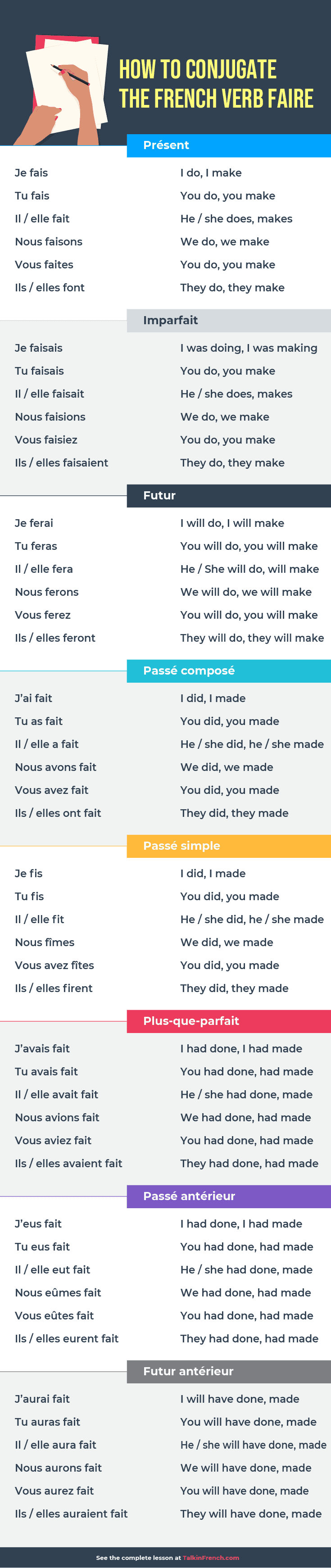
How to conjugate Faire in the present tense (Présent)
| Je fais | I do, I make |
| Tu fais | You do, you make |
| Il / elle fait | He / she does, he / she makes |
| Nous faisons | We do, we make |
| Vous faites | You do, you make |
| Ils / elles font | They do, they make |
How to conjugate Faire in the Imparfait
The imperfect is used to create a sense of something that continued happening in the past. In English we would say ‘I was doing something’ or that ‘I used to do it’.
| Je faisais | I was doing, I was making |
| Tu faisais | You do, you make |
| Il / elle faisait | He / she does, he / she makes |
| Nous faisions | We do, we make |
| Vous faisiez | You do, you make |
| Ils / elles faisaient | They do, they make |
How to conjugate Faire in the Futur
| Je ferai | I will do, I will make |
| Tu feras | You will do, you will make |
| Il / elle fera | He / she will do, he / she will make |
| Nous ferons | We will do, we will make |
| Vous ferez | You will do, you will make |
| Ils / elles feront | They will do, they will make |
How to conjugate Faire in the Passé Composé
| J’ai fait | I did, I made |
| Tu as fait | You did, you made |
| Il / elle a fait | He / she did, he / she made |
| Nous avons fait | We did, we made |
| Vous avez fait | You did, you made |
| Ils / elles ont fait | They did, they made |
How to conjugate Faire in the Passé Simple
| Je fis | I did, I made |
| Tu fis | You did, you made |
| Il / elle fit | He / she did, he / she made |
| Nous fîmes | We did, we made |
| Vous avez fîtes | You did, you made |
| Ils / elles firent | They did, they made |
How to conjugate Faire in the Plus-que-Parfait
| J’avais fait | I had done, I had made |
| Tu avais fait | You had done, you had made |
| Il / elle avait fait | He / she had done, he / she had made |
| Nous avions fait | We had done, we had made |
| Vous aviez fait | You had done, you had made |
| Ils / elles avaient fait | They had done, they had made |
How to conjugate Faire in the Passé Antérieur
| J’eus fait | I had done, I had made |
| Tu eus fait | You had done, you had made |
| Il / elle eut fait | He / she had done, he / she had made |
| Nous eûmes fait | We had done, we had made |
| Vous eûtes fait | You had done, you had made |
| Ils / elles eurent fait | They had done, they had made |
How to conjugate Faire in the Futur Antérieur
| J’aurai fait | I will have done, I will have made |
| Tu auras fait | You will have done, you will have made |
| Il / elle aura fait | He / she will have done, he / she will have made |
| Nous aurons fait | We will have done, we will have made |
| Vous aurez fait | You will have done, you will have made |
| Ils / elles auraient fait | They will have done, they will have made |
How to conjugate Faire in the Subjunctive mood (Subjonctif)
How to conjugate Faire in Present Subjunctive (Subjonctif Présent)
| que je fasse | that I do, that I make |
| que tu fasses | that you do, that you make |
| qu’il / elle fasse | that he / she does, that he / she makes |
| que nous fassions | that we do, that we make |
| que vous fassiez | that you do, that you make |
| qu’ils / elles fassent | that they do, that they make |
How to conjugate Faire in Imperfect Subjunctive (Subjonctif Imparfait)
| que je fisse | that I was doing, that I was making |
| que tu fisses | that you were doing, that you were making |
| qu’il / elle fît | that he / she was doing, that he / she was making |
| que nous fissions | that we were doing, that we were making |
| que vous fissiez | that you were doing, that you were making |
| qu’ils / elles fissent | that they were doing, that they were making |
How to conjugate Faire in Past Subjunctive (Subjonctif Passé)
| que j’aie fait | that I did, I made |
| que tu aies fait | that you did, you made |
| qu’il / elle ait fait | that he / she did, he / she made |
| que nous ayons fait | that we did, we made |
| que vous ayez fait | that you did, you made |
| qu’ils / elles aient fait | that they did, they made |
How to conjugate Faire in Past Perfect Subjunctive (Plus-que-Parfait)
| que j’eusse fait | that I had done, I had made |
| que tu eusses fait | that you had done, you had made |
| qu’il / elle eût fait | that he / she had done, he / she had made |
| que nous eussions fait | that we had done, we had made |
| que vous eussiez fait | that you had done, you had made |
| qu’ils / elles eussent fait | that they had done, they had made |
How to conjugate Faire in the Conditional Mood (Conditionnel)
How to conjugate Faire in the Present Conditional (Conditionnel Présent)
| Je ferais | I would do, I would make |
| Tu ferais | You would do, you would make |
| Il / elle ferait | He / she would does, he / she would make |
| Nous ferions | We would do, we would make |
| Vous feriez | You would do, you would make |
| Ils / elles feraient | They would do, they would make |
How to conjugate Faire in the Past Conditional (Conditionnel Passé)
| J’aurais fait | I would have done, I would have made |
| Tu aurais fait | You would have done, You would have made |
| Il / elle aurait fait | He / she would have done, he / she would have made |
| Nous aurions fait | We would have done, we would have made |
| Vous auriez fait | You would have done, you would have made |
| Ils / elles auraient fait | They would have done, they would have made |
How to conjugate Faire in Participe
| Présent | faisant |
| Passé | fait |
| Passé Composé | ayant fait |
How to conjugate Faire in the Imperative Mood (Impératif)
| Présent | (tu) fais (nous) faisons (vous) faites |
| Passé | (tu) aies fait (nous) ayons fait (vous) ayez fait |
How to conjugate Faire in the Infinitive Mood (Infinitif)
| Présent | faire |
| Passé | avoir fait |
Quick Exercise – fill in the blanks
1. Je _____ la lessive le weekend.
ANSWER: Je fais la lessive le weekend.
2. Il _____ un potage avec des pommes de terre.
ANSWER: Il fait un potage avec des pommes de terre.
3. _____ ton lit, mon cher.
ANSWER: Fais ton lit, mon cher.
4. Ils _____ de la natation chaque dimanche.
ANSWER: Ils font de la natation chaque dimanche.
5. On dit qu’il _____ beau demain.
ANSWER: On dit qu’il fera beau demain.
6. J’ai ____ peur a mon chat.
ANSWER: J’ai fait peur a mon chat.
7. Il _______ trop chaud ce matin.
ANSWER: Il faisait trop chaud ce matin.
8. Nous _____ _______ une pizza pour les enfants.
ANSWER: Nous avons fait une pizza pour les enfants.
9. Qu’est-ce que vous ______ ____ hier soir?
ANSWER: Qu’est-ce que vous avez fait hier soir?
10. Je _______ bâtir une maison, si j’avais assez d’argent.
ANSWER: Je ferais bâtir une maison, si j’avais assez d’argent.
Conclusion
Great you’ve just gone through the Faire conjugation! As the fourth most commonly used verb in French, you really do need to learn it thoroughly. It will reap huge rewards when you do. And the more verbs you learn, the more you’ll see patterns that help you easily memorize even irregular verbs like Faire.
If you thought learning verbs meant learning by rote and chanting your way through them, you’re mistaken. You can easily and naturally get them set in your memory if you use the audio drills every day.
Why don’t you check out the Verb Conjugation Course and see how easily it comes to you?
Still Stuck at Intermediate French?

Break through the plateau with our proven coaching and study method.
Here are some FAQs about French Verb FAIRE
How do you conjugate faire in passé composé?
J’ai fait (I did, I made)
Tu as fait (you did, you made)
Il/elle a fait (he/she did, he/she made)
Nous avons fait (we did, we made)
Vous avez fait (you did, you made)
Ils/elles ont fait (they did, they made)
How do you conjugate faire in the present tense?
Je fais (I do, I make)
Tu fais (you do, you make)
Il/elle fait (he/she does, he/she makes)
Nous faisons (we do, we make)
Vous faites (you do, you make)
Ils/elles font (they do, they make)
How do you conjugate faire in le subjonctif?
Subjonctif Présent (Present Subjunctive):
- Que je fasse (that I do, that I make)
- Que tu fasses (that you do, that you make)
- Qu’il/elle fasse (that he/she does, that he/she makes)
- Que nous fassions (that we do, that we make)
- Que vous fassiez (that you do, that you make)
- Qu’ils/elles fassent (that they do, that they make)
Subjonctif Passé (Past Subjunctive):
- Que j’aie fait (that I did, that I made)
- Que tu aies fait (that you did, that you made)
- Qu’il/elle ait fait (that he/she did, that he/she made)
- Que nous ayons fait (that we did, that we made)
- Que vous ayez fait (that you did, that you made)
- Qu’ils/elles aient fait (that they did, that they made)
Subjonctif Imparfait (Imperfect Subjunctive):
- Que je fisse (that I was doing, that I was making)
- Que tu fisses (that you were doing, that you were making)
- Qu’il/elle fît (that he/she was doing, that he/she was making)
- Que nous fissions (that we were doing, that we were making)
- Que vous fissiez (that you were doing, that you were making)
- Qu’ils/elles fissent (that they were doing, that they were making)
Plus-que-Parfait (Past Perfect Subjunctive):
- Que j’eusse fait (that I had done, that I had made)
- Que tu eusses fait (that you had done, that you had made)
- Qu’il/elle eût fait (that he/she had done, that he/she had made)
- Que nous eussions fait (that we had done, that we had made)
- Que vous eussiez fait (that you had done, that you had made)
- Qu’ils/elles eussent fait (that they had done, that they had made)
How do you conjugate faire in l’impératif?
Impératif Présent:
- (Tu) fais ! ([You] do…!)
- (Nous) faisons ! ([We] do…!)
- (Vous) faites ! ([You] do…!)
Impératif Passé:
- (Tu) aies fait ! ([You] have [it] done…!)
- (Nous) ayons fait ! ([We] have [it] done…!)
- (Vous) ayez fait ! ([You] have [it] done…!)