
French Negation: Your Guide to Negative Adverbs, Adjectives and More

So, you’ve learned how to conjugate in French and talk about things you’re doing, But how do you talk about things you’re not doing?
Knowing how to negate your sentences in French will help you communicate exactly what you mean (or don’t mean). You can clear up a lot with la négation
(negation), so let’s start with the basics and build from there.
Download:
This blog post is available as a convenient and portable PDF that you
can take anywhere.
Click here to get a copy. (Download)

Basic French Negation Using Ne… Pas
The simplest way to negate a sentence in French is to write ne
or n’ before the main verb and pas
after that verb. This typically applies in simple tenses (i.e., when there’s only one conjugated verb in the sentence).
Je ne parle pas espagnol.
(I don’t speak Spanish.)
Il ne va pas à l’école demain.
(He’s not going to school tomorrow.)
There are a few things to note when using the ne… pas negative construction.
Common French Negation Phrases
Using Adverbs
While the ne… pas construction is technically a negative adverb, other adverbs can either be used in place of or alongside pas to negate the verb.
Check out these additional negative adverbs:
Using Adjectives
Like adverbs, adjectives can be used in place of pas in the negative construction.
This is different from using a negative adverb—the adjective must negate the following noun and therefore doesn’t follow the helper verb if there is one.
Note that both of the negative adjective phrases below must agree with the gender of the noun that follows.
Using Pronouns
Negative pronouns can be used in place of pas in a negative construction, but they are different because:
- They negate the pronoun that replaces the noun.
- When used after the verb, they can follow either the helper verb or the main verb in compound tenses.
- They can be moved to the beginning of the sentence.
Also, there are two main ways to construct French negation using pronouns: ne… personne and ne… rien.
Using N’importe
Just one more negative construction, I promise!
The expression n’importe
means “no matter,” “any” or “whichever” in French and can be followed by an interrogative adjective, adverb or pronoun.
Note that when the construction includes quel
(which), the word must agree in gender with the following noun. Check out these examples below.
Other Expressions That Use Negation in French
Aside from what we’ve already talked about above, here are some other ways to express negation in French.
Practicing French Negation
To see all of these negation rules in action, and to experience all the many ways native speakers say “no” in French, try to immerse yourself in authentic content. Think podcasts, French movies and talk shows—basically anything that will let you listen to French speakers conversing naturally with one another.

For example, there’s the language learning program FluentU.
You can also head on over to Lingolia for a mix of exercises on all the negative constructions we’ve covered. Some will have you choose the correct word of negation between two options, while others will have you rewrite positive sentences as negatives.
After that, Tex’s French Grammar has some slick fill-in-the-blank exercises where you can check your answers.
Finally, ProProfs has more quizzes to keep you reviewing those negative constructions for days.
Just don’t quit, okay?
See what I did there?
Download:
This blog post is available as a convenient and portable PDF that you
can take anywhere.
Click here to get a copy. (Download)
And one more thing…
If you like learning French vocabulary on your own time and from the comfort of your smart device, then I’d be remiss to not tell you about FluentU.
Other sites use scripted content. FluentU uses a natural approach that helps you ease into the French language and culture over time. You’ll learn French as it’s actually spoken by real people.
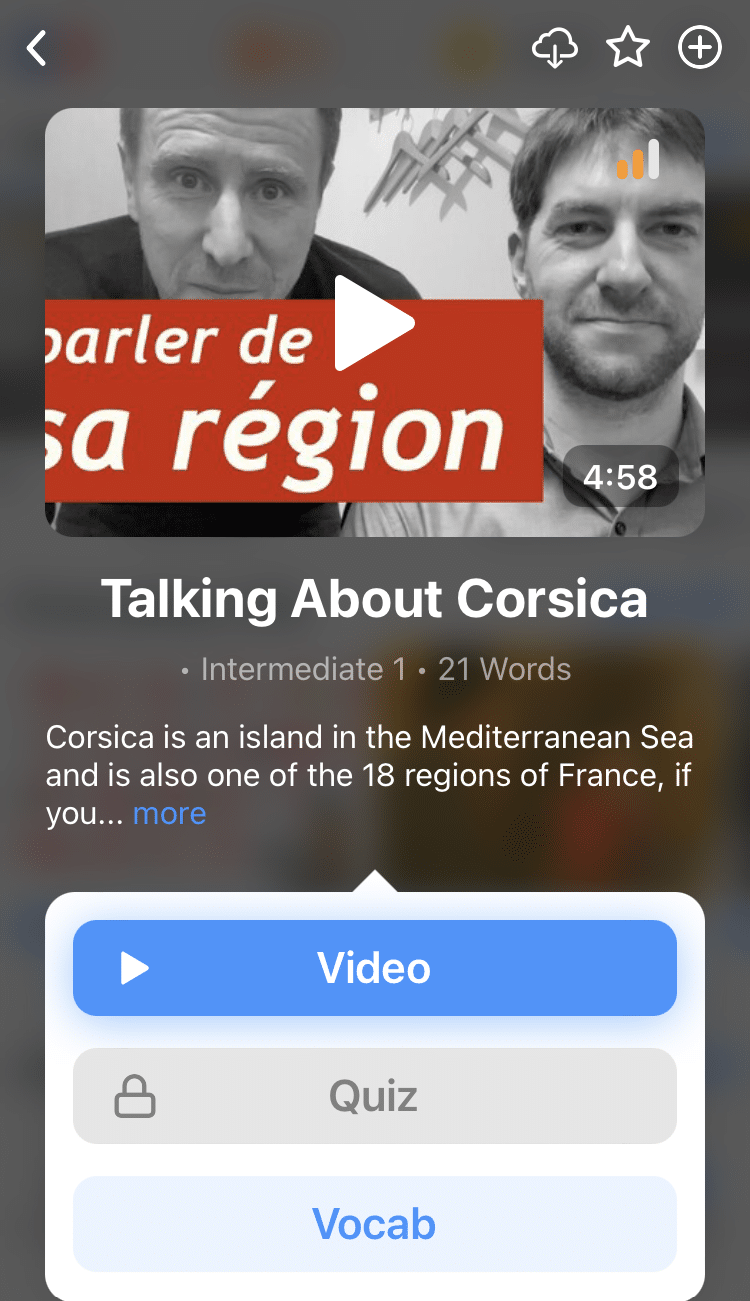
FluentU has a wide variety of great content, like interviews and web series, as you can see here:
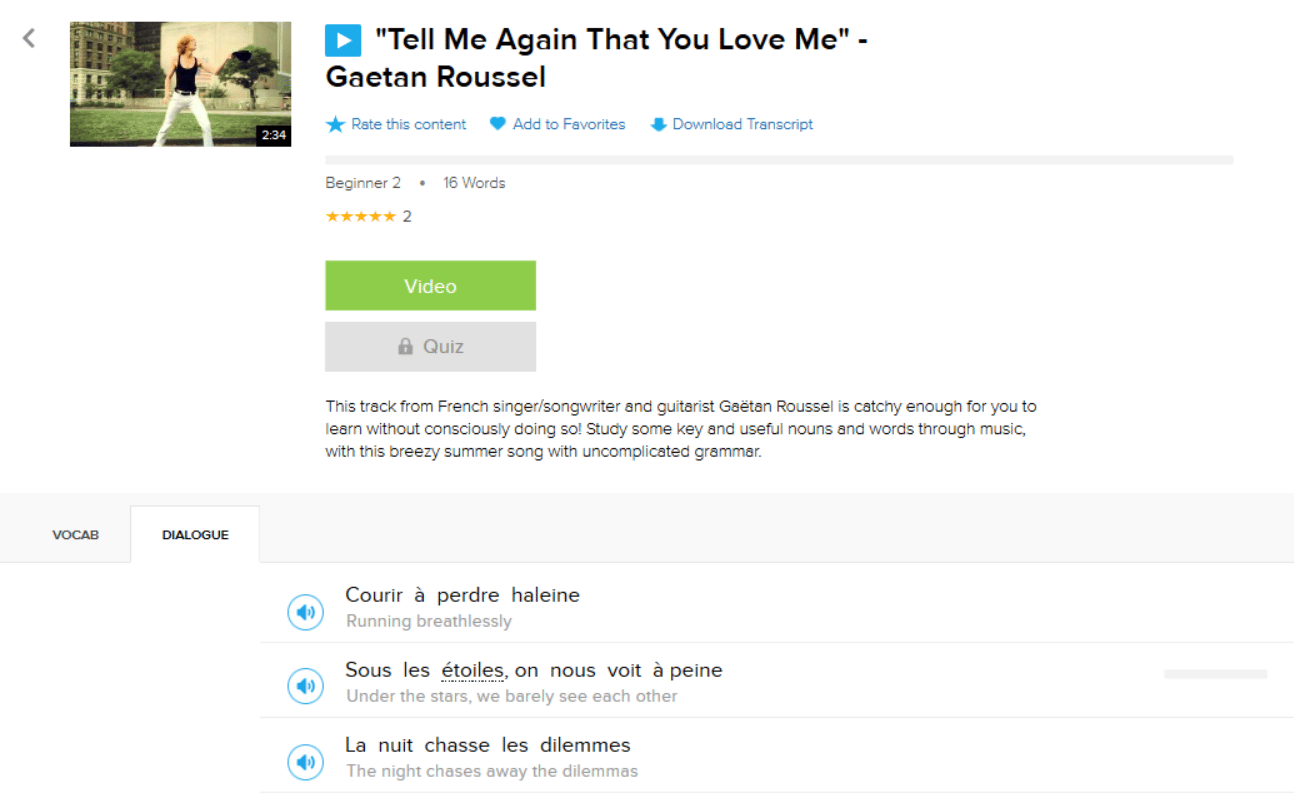
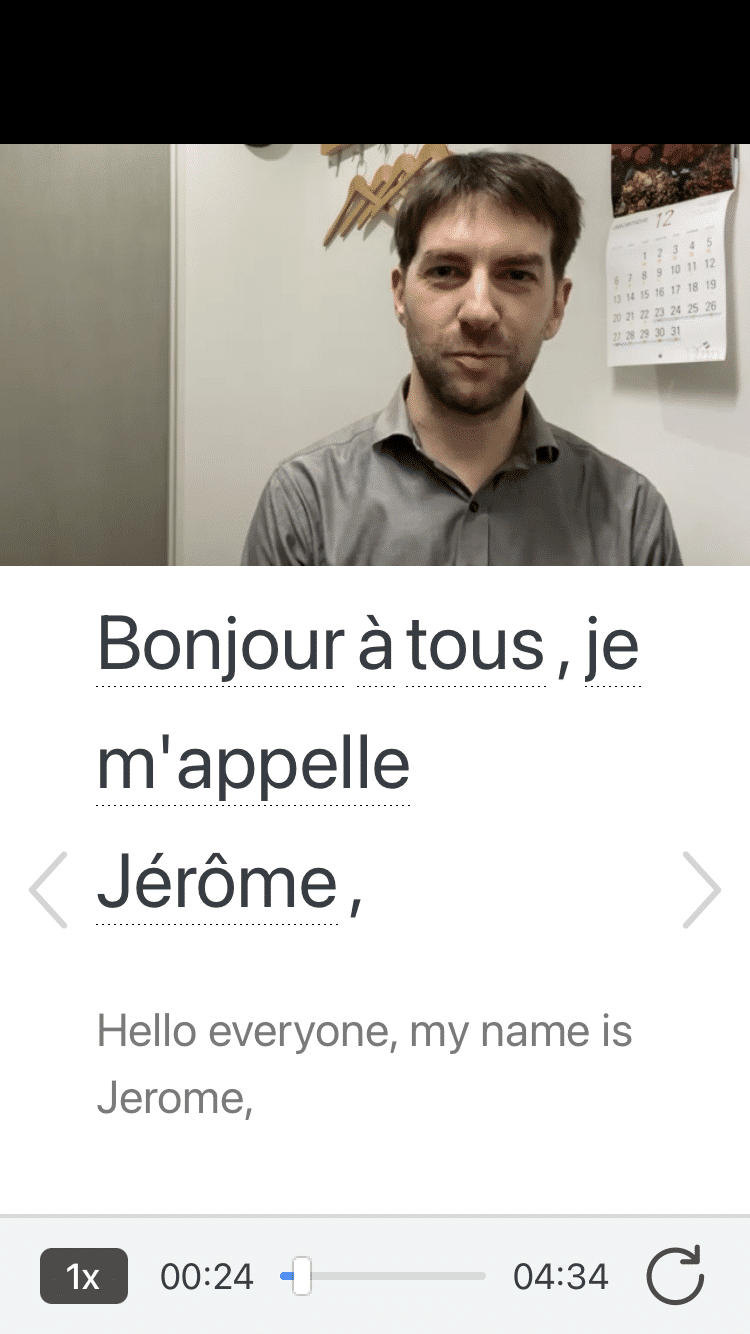
FluentU brings native videos within reach with interactive subtitles.
You can tap on any word to look it up instantly. Every definition has examples that have been written to help you understand how the word is used.
For example, if you tap on the word « crois, » you’ll see this:
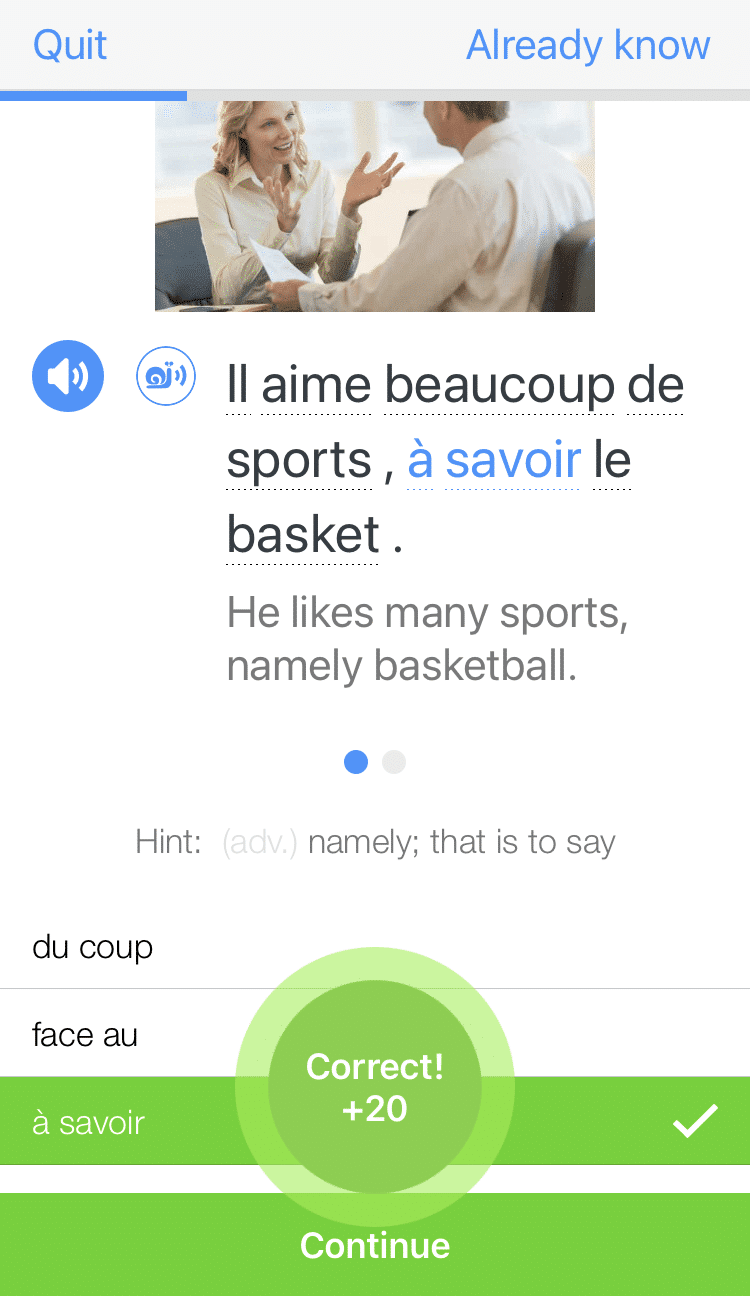
Practice and reinforce all the vocabulary you’ve learned in a given video with FluentU’s adaptive quizzes. Swipe left or right to see more examples for the word you’re learning and play the mini-games found in the dynamic flashcards, like « fill in the blank. »
As you study, FluentU tracks the vocabulary that you’re learning and uses this information to give you a 100% personalized experience.
It gives you extra practice with difficult words—and reminds you when it’s time to review what you’ve learned.
Start using the FluentU website on your computer or tablet or, better yet, download the FluentU app from the iTunes or Google Play store. Click here to take advantage of our current sale! (Expires at the end of this month.)

Michael Cristiano is a Canadian writer, teacher and language learner. He began learning French at the age of 6, and from then, he knew he wanted to learn all the languages in the world. Seriously. When he is not studying languages or writing blog posts, he can be seen writing fiction, teaching languages or travelling the world.