
68 Basic Yet Useful French Sentences

Having a conversation in French is much like having one in English, as parler de tout et de rien
(small talk) is essentially the same all around the world.
But there are some basic words and phrases you should know before you say bonjour to your new acquaintance and get into the thick of the conversation.
Here are some super useful yet basic French sentences to use in conversations.
Download:
This blog post is available as a convenient and portable PDF that you
can take anywhere.
Click here to get a copy. (Download)
French Sentences for Introductions

Comment vous appelez-vous ?
(What’s your name?)
“What’s your name?” is arguably the most common conversation starter.
You can also use the more informal Comment t’appelles-tu ?
. To be safe, though, you’d want to use the formal version to show respect.
Je m’appelle…
(My name is…)
Appeler
is actually the French verb meaning “to call,” so Je m’appelle
literally translates to “I call myself.”
Enchanté !
/ Enchantée !
(Pleased to meet you!)
This is the simplest and most common way to tell the person you just met that you’re pleased to meet them.
Other options include:
Note: The “e” that you see at the end of enchanté(e) is added when a woman is speaking. This, of course, only matters if you’re corresponding in writing, since this extra “e” doesn’t affect the pronunciation at all.
There are a lot of ways to continue the initial introduction. You could ask one of the other questions on this list, or say something kind about what they’re wearing, such as J’aime bien votre t-shirt
(I like your T-shirt).
French Sentences for Polite Conversation

D’où viens-tu ?
/ D’où venez-vous ?
(Where are you from?)
Although D’où viens-tu ? and D’où venez-vous ? have the same translation in English, it’s important to pay attention to the last word used in each phrase.
The first one that includes tu
is the informal version that should only be used with friends, family or peers. The second version, with the formal vous
, is more appropriate with people that you’ve just met, and will probably be the better choice in most situations.
You can read more about tu versus vous here.
Je viens de…
(I’m from…)
This phrase comes in handy once you’ve introduced yourself. You can use this to refer to your country or city of origin. For example, I’m from Atlanta, Georgia in the United States, so I could say either Je viens des États-Unis
or Je viens d’Atlanta
.
Notice how the de
changes depending on the noun used. Since the word for “United States” in French is plural, it uses des
rather than de. And since “Atlanta” begins with a vowel, and de ends with an “e,” you drop the “e” in de.
This rule only applies to words that end in “e” that are directly next to words beginning in a vowel—words ending in “a,” “o,” “u” and “y” are never connected in that fashion.
J’habite à…
(I live in…)
You’ll likely use this as a follow-up to Je viens de (insert where you’re from here). For me, that answer is New York City, so I would say J’habite à New York
.
Be careful, though, because the à
is only used when you’re talking about a city. When you want to refer to the country where you live, things get a bit more complex.
As a general rule, if the country you live in ends with an “e” in French, it’s a feminine country and you’ll use en
. If the country you live in ends with anything but an “e,” it’s most likely a masculine country and you’ll use au
—unless of course the country is plural (like les États-Unis
— the United States), in which case you’ll use aux
.
For example:
Note: Remember how we dropped the “e” in de for the phrase “Je viens de…”? Here, we’re doing the same with Je
and habite.
The “h” in habite is treated like a vowel because the pronunciation of the word actually drops the “h.” For this reason, many words beginning with “h” in French are treated like vowels.
Où est-ce que tu habites ?
/ Où est-ce que vous habitez ?
(Where do you live?)
This directs the question “Where do you live?” back to the other person. This will give them a chance to share a little bit about themselves, and will surely bring up some great conversation points on traveling (if you’ve visited their home country/city) and culture.
Qu’est-ce que vous faites ?
(What is your profession?)
The literal translation of this phrase is “What do you do,” but in conversation it means “What is your profession?” The informal version of the question is Qu’est-ce que tu fais ?
Asking this question will give you a chance to hear and use job words in French like:
Qu’est-ce que vous aimez faire pendant votre temps libre ?
(What do you do in your free time?)
This phrase extends the small talk to what the person likes to do in their temps libre
(free time). The informal version is Qu’est-ce que tu aimes faire pendant ton temps libre ?
.
J’aime faire…
(I like to do…)
Your response to the previous question will likely start with this phrase. However, the word faire
, which means “to make” or “to do,” can be replaced with any verb that describes what you enjoy doing. For example, I like to write, so I would say J’aime écrire
(I like to write).
This phrase will help you practice vocabulary related to hobbies like:
Quel temps fait-il ?
(How’s the weather?)
This phrase can also be translated as “What’s the weather like?” and will give you a chance to use weather-related words such as:
Of course, you’ll also want to account for the seasons, as well.
Demain, il fait…
(Tomorrow, it will be…)
If you’d looked at tomorrow’s weather beforehand, you can talk about the expected weather for the next day using this sentence.
Depending on the forecast, you can follow il fait
(it will be) with:
Est-ce que vous avez des frères et sœurs ?
(Do you have siblings?)
This sentence, which literally translates to “Do you have brothers and sisters?,” will launch a conversation about family. In French, it’s more common to ask if you have any brothers and sisters rather than if you have siblings.
The informal version would be Est-ce que tu as des frères et sœurs ?
Et tes/vos parents ? Qu’est-ce qu’ils font ?
(And your parents? What do they do for a living?)
After asking about the siblings, the logical next question will be about the parents.
You could also talk about your own family, like:
Notice that you use the possessive adjective tes
(your) if you’re speaking informally and vos
(your) if you’re speaking formally.
Quel est ton film préféré ?
/ Quel est votre film préféré ?
(What’s your favorite movie?)
This question will give you a chance to talk about that movie you saw with your best friend last weekend while practicing adjectives to describe either un mauvais film
(a bad film) or un bon film
(a good film).
You can talk about your own favorite movie by starting the sentence with Mon film préféré est…
(My favorite film is…). Use the French title so you can practice your pronunciation!
You can also substitute “movie” for any other topic you’d like to discuss, like:
Est-ce que vous avez visité… ?
(Have you visited… ?)
This sentence is great for discussing the interesting places around your city that you find interesting. Simply insert the noun at the end of the sentence to ask, “Have you visited…?”
Some of the places you can talk about are:
| French | English |
| l’église | the church |
| la vieille maison | the old house |
| la maison | the house |
| l’école | the school |
| le parc | the park |
| la plage | the beach |
| le restaurant | the restaurant |
| le café | the café |
| le musée | the museum |
| le cinéma | the cinema |
| le magasin | the store/shop |
| le stade | the stadium |
| le jardin | the garden |
| le bateau | the boat |
| le centre commercial | the shopping mall |
| le bureau | the office |
| la bibliothèque | the library |
| le pont | the bridge |
| la gare | the train station |
| l’aéroport | the airport |
| le monument | the monument |
| la montagne | the mountain |
| la plage | the beach |
With good friends and family, be sure to use the informal question Est-ce que tu as visité… ?
On the other hand, if you want to ask your boss whether they’ve visited Paris, you’d say Est-ce que vous avez visité Paris ?
(Have you visited Paris?) Make sure to restrict this to talking about places you’ve visited.
When visiting people, you’d use the verb rendre visite à
, as in Je rends visite à mes parents ce week-end
(I’m visiting my parents this weekend).
You can mention your own experiences here, as well. For example, if you’ve dropped by Le Louvre recently, you can say Récemment, j’ai visité le musée du Louvre.
(Recently, I went to the Louvre.) This sentence can introduce an entire conversation about the wonderful paintings you saw during your visit to the iconic museum.
And if you’re looking for more conversations in French to learn from, you can check out the language learning platform FluentU.
Here are a few more useful phrases for making small talk in French:
And if you need clarification:
French Phrases for the Bank, Post Office or Shops
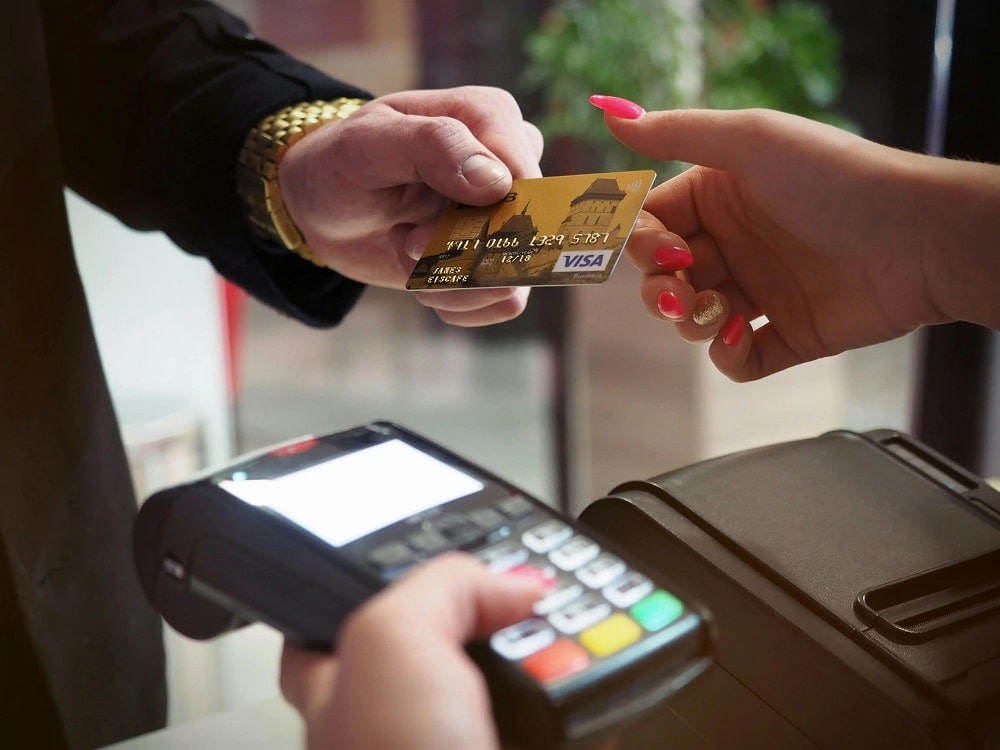
We’re getting down to business now, right?
Here are some French sentences you’ll need for taking care of business at the bank, post office or shops while abroad:
French Sentences for the Taxi Driver

Your taxi driver is speeding down la rue Michel-le-Comte
in Paris. It’s narrow, as so many old Parisian lanes are, twisting into unimaginable pretzel-like shapes, and you think your driver is trying to kill you within your first hour in the city!
While experiences with French taxis can be hit-or-miss, you could always get a great taxi driver who is full of suggestions, jokes, or maybe just wants to give you a discounted fare. I had a taxi driver in New York buy me breakfast once while we were connecting flights between JFK and New Jersey’s airports.
No matter what kind of experience you end up having, you should definitely know a few French sentences to use with your cab driver. Bring the polite conversation skills you’ve just learned to the waiting cab, and add these situation-specific sentences to your repertoire.
That last one will definitely come in handy if you happen to be traveling in France. The taxi drivers in several French cities notoriously “forget” to start le compteur
(the meter).
French Phrases for Booking or Lodging
You’ll definitely need to book a room for your stay. Look into the local customs of the French-speaking country you’ll be visiting, because it might be appropriate to barter for the price of the room!
Here are some French sentences that will help you book hotels, short-stay apartments or B&B’s:
That’ll get you started and settled in your room. In the unfortunate event that you find some roaches somewhere hiding underneath your pillows waiting to keep you company, you might need to know Il y a des cafards dans ma chambre !
(There are roaches in my room!) But let’s hope not!
French Phrases for the Hospital or Injuries

This is a worst-case scenario and one that I hope you’ll never encounter. But on your travels in France, you might find yourself needing to communicate an injury or find a doctor or hospital, and that’s not a time for miming or searching through your phrasebook or French app on your phone.
Before diving into those conversations, let’s get you started with some specifics. With these phrases, you’ll easily be able to communicate what’s wrong and take a quick step toward making it all better!
J’ai mal…
(My … hurts.)
This sentence directly translates to “I have badness…” but what it really means is “I hurt.” Finish the sentence with a body part, and you’ll be able to say “My ____ hurts.”
Of course, to do that, you’ll need the body parts and some prepositions—admittedly not everyone’s favorite part of mastering French grammar, but you’ll soon see it’s actually easy as pie!
J’ai mal is used with the à la/au/aux/à l’ series of prepositions. To know which one to use, you’ll need to know the gender and number of the noun you need.
Here are a few examples:
Here are some more body part words that can be used with this construction:
Je suis allergique à…
(I am allergic to…)
Now that you know how to say what’s hurting, you can also easily say what you’re allergic to! Allergies use the same à la/au/aux/à l’ construction as the above sentence. What’s more, most medications are the same or nearly the same word in French and English.
If your allergy is not a medication, here are a few common allergens in French:
Note: Gluten-free dining is relatively new in France. If gluten-free foods are a necessity for your health, it would be a good idea to detail the things that you cannot eat on a card and give it to your server. Things on the list could/should include:
These sentences can all help avoid a medical emergency, but if the situation is more dire, know that you have several options in France.
Où est l’hôpital ?
(Where is the hospital?)
If you need to get to the hospital but don’t need to travel by ambulance, a simple question concerning the location of the hospital may be enough.
That being said, taxis are forbidden by law from taking passengers with a medical emergency. If you have travel insurance, ambulance transport is usually covered.
Il me faut une ambulance.
(I need an ambulance.)
To have an ambulance come pick you up, use this sentence. Again, keep in mind that you’re not legally allowed to take a taxi during medical emergencies.
J’ai besoin d’un médecin.
(I need a doctor.)
Of course, there are some medical emergencies best suited to a doctor or physician, not a hospital. For these situations, use the above sentence.
You can modify the aforementioned sentence in several ways. Just change the general word médecin
to ask for a type of doctor in particular:
If you would like your doctor to speak English, simply say the word anglophone
(English-speaking) at the end of the sentence.
For more medical vocabulary, check out this post.
French Phrases for Non-medical Emergencies

When visiting a foreign country, the last thing you want is to be the victim of a robbery, theft or other emergencies. Should you find yourself in such situations, you need to be able to convey what you need as quickly and concisely as possible.
Quelqu’un m’a pris…
(Someone took (from me)…)
As prendre
is a transitive verb, all you need to follow up this sentence with is the noun of the object that has been stolen preceded by the correct form of “my”—namely ma
, mon
or mes
:
Here are a few other words that can be used with this construction:
J’ai une assurance voyage.
(I have traveler’s insurance.)
Once you’ve declared the stolen object at the local police préfecture
(prefecture), you may need to let them know about your insurance.
Make sure you ask for a simple translation of the terms and conditions of your policy. That way, you can show them to concerned parties and get back to your otherwise awesome vacation as soon as possible!
J’ai perdu
/ On m’a volé mon passeport. Où est le consulat… ?
(I lost/Someone stole my passport. Where is the consulate?)
Losing your passport in a foreign country can cause some serious problems, including having to replace it in order to get home. To do this, you’ll need to visit l’ambassade
(the embassy) or le consulat
(the consulate) of your native country, meaning you’ll need to know the French adjective that describes your homeland. Here are a few:
Je sens…
(I smell…)
There are some things that you just don’t think about having to say until you need them—like strange smells, for example.
And I’m not just talking about smells in les toilettes
(the restrooms). If you’re smelling gas or smoke coming from anywhere near you, you should keep these phrases handy:
Au secours !
(Help!)
Sometimes, for whatever reason, you can’t explain the exact nature of the help you need. Maybe it’s too complex and requires too many details. Or maybe the situation is in process, and you just want to get someone’s attention so that they can help. For these situations (and many others when you’re just too frazzled to remember all of the stock phrases above), a generic “Help!” will do.
How to Memorize and Practice Survival French Phrases

- Practice, practice, practice. I can’t stress enough that the more you practice these French sentences, the easier it will become to smoothly say some of the more unusually accented words in the French language. Even if you get stuck in a situation where you don’t know exactly what to say, you won’t be at a loss for a response while you’re, say, ordering a nice Bordeaux red if you have a decent memory bank of French sentences ready to go.
- Use the “Goldlist Method” for memorization. This strategy was created by the polyglot David James. It employs 20-minute study chunks in which words are written by hand on paper in the foreign language being studied, and the translations in English on the opposite page. Twenty-five words are written 25 at a time and then read aloud—the whole process hopefully taking you about 20 minutes tops. Afterward, make sure to give your brain an immediate break to let it all sink in subconsciously. With sentences, it may be necessary to do slightly fewer than 25, as it’s important not to overburden yourself with too much information. Otherwise, it becomes even more difficult to retain.
- Immerse yourself in French before and after your trip. If you’re reading this now, you most likely have access to the internet. The beauty of this nifty little modern technology is that you can use it to inundate yourself in French. You could listen to these awesome French singers or play some of these French tunes on your way to work, while cooking dinner or while working out.
- Use flashcards and sticky notes. If you prefer to write out words or sentences and see them on a regular basis, write them on some flashcards or sticky notes. Then, label the items around your home in places you’ll run into them constantly.
- Don’t be shy about practicing what you’ve learned with native French speakers. One of the beauties of foreign travel—besides the new sights and entertainments—is the genuine exchange of culture. It can be intimidating trying to flex your new French muscles, but for the most part, people will appreciate your efforts. If someone doesn’t speak your native language, you’ll quickly discover how necessary these French sentences will be. Most people are proud of their heritage, customs and language, and won’t hesitate to help facilitate whatever words you may be missing.
Here are a few more ways to start a French conversation:
From a coffee shop chat to a quick catch-up on the subway, these quick conversations can happen anytime—and these phrases will help you make the most of these encounters!
Download:
This blog post is available as a convenient and portable PDF that you
can take anywhere.
Click here to get a copy. (Download)
And one more thing…
If you like learning French vocabulary on your own time and from the comfort of your smart device, then I’d be remiss to not tell you about FluentU.
Other sites use scripted content. FluentU uses a natural approach that helps you ease into the French language and culture over time. You’ll learn French as it’s actually spoken by real people.
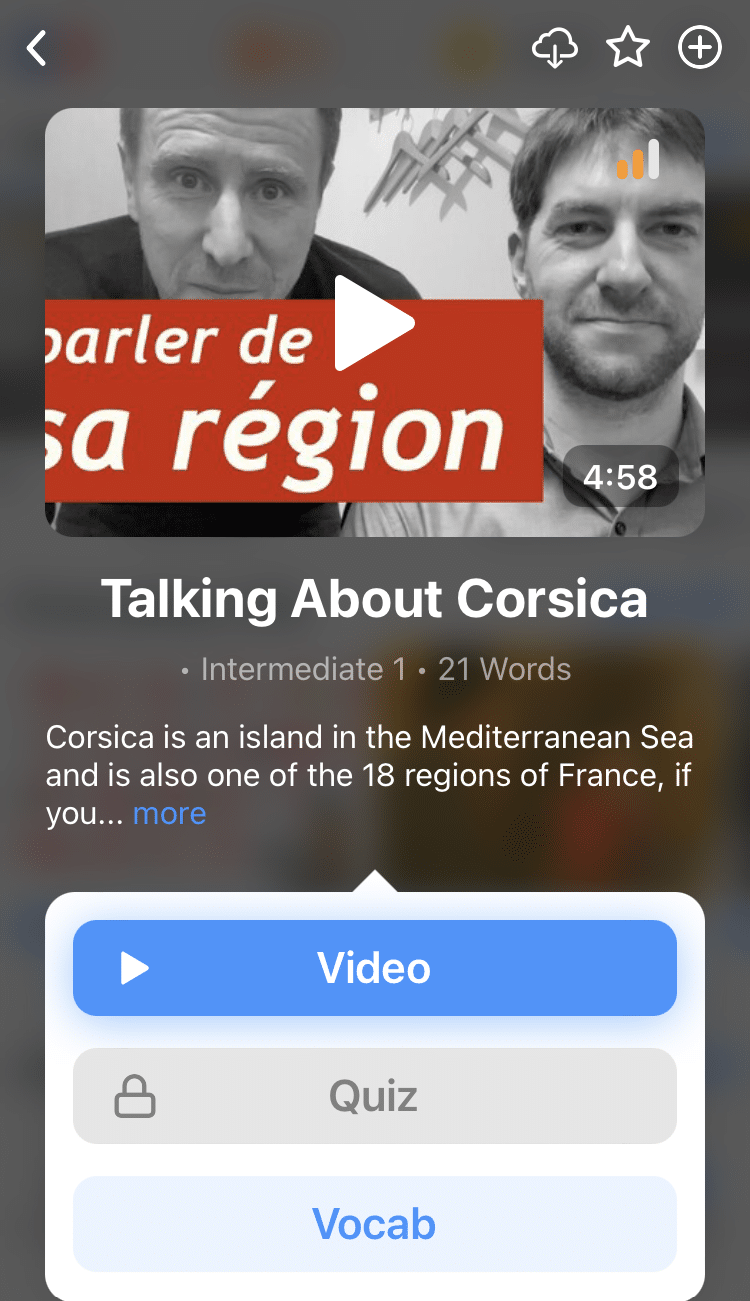
FluentU has a wide variety of great content, like interviews and web series, as you can see here:
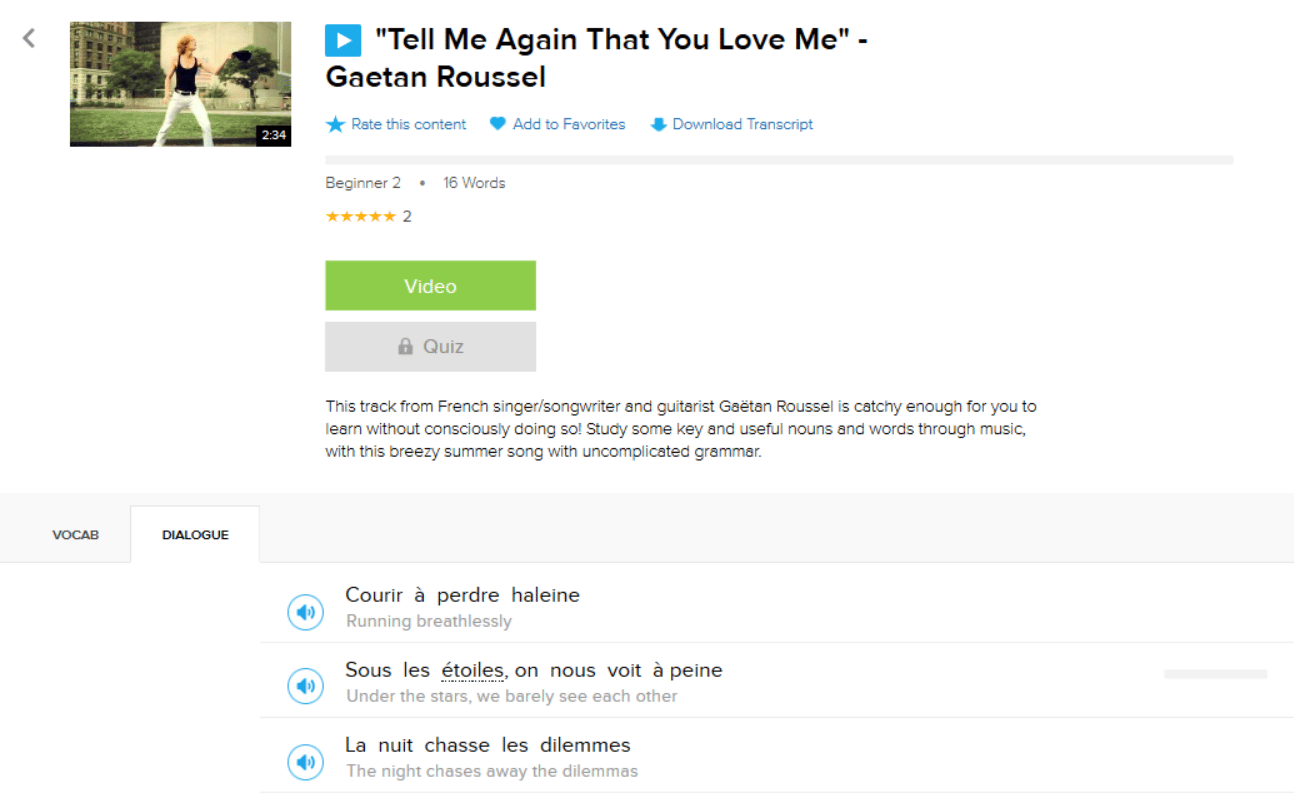
FluentU brings native videos within reach with interactive subtitles.
You can tap on any word to look it up instantly. Every definition has examples that have been written to help you understand how the word is used.
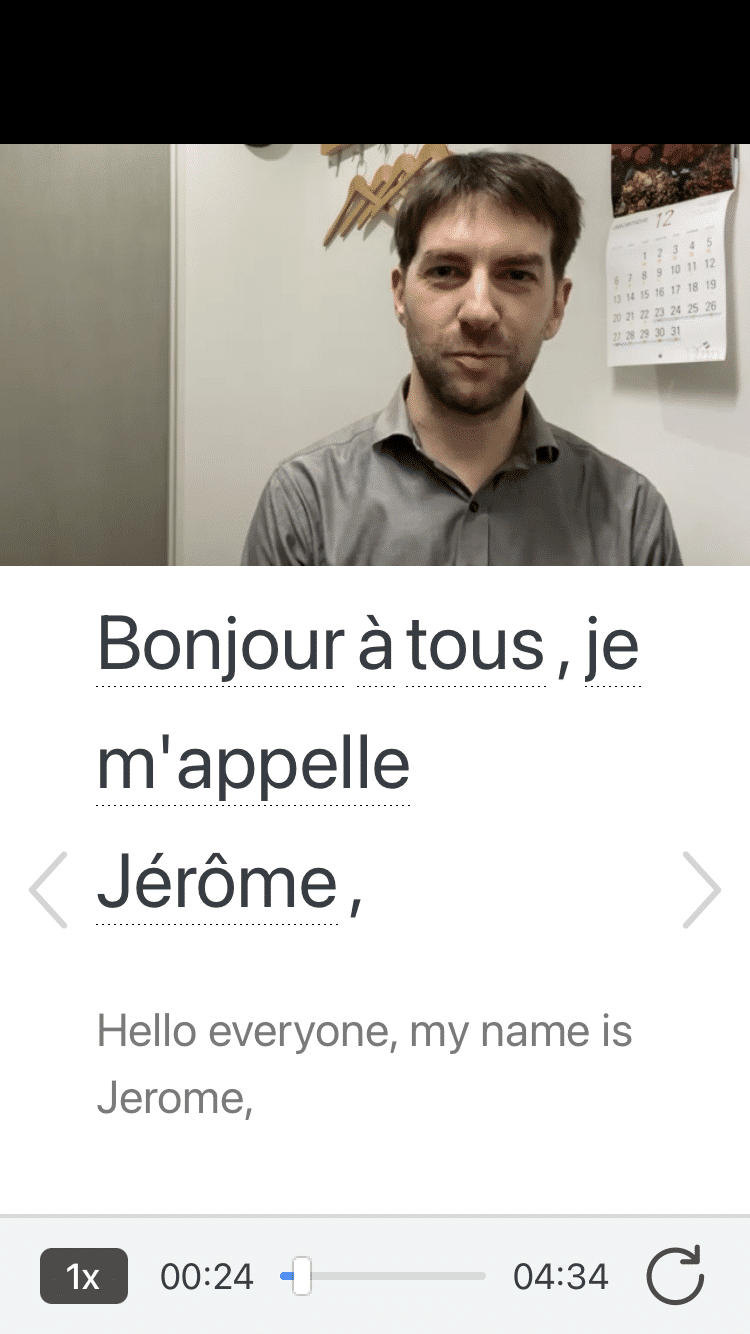
For example, if you tap on the word « crois, » you’ll see this:
Practice and reinforce all the vocabulary you’ve learned in a given video with FluentU’s adaptive quizzes. Swipe left or right to see more examples for the word you’re learning and play the mini-games found in the dynamic flashcards, like « fill in the blank. »
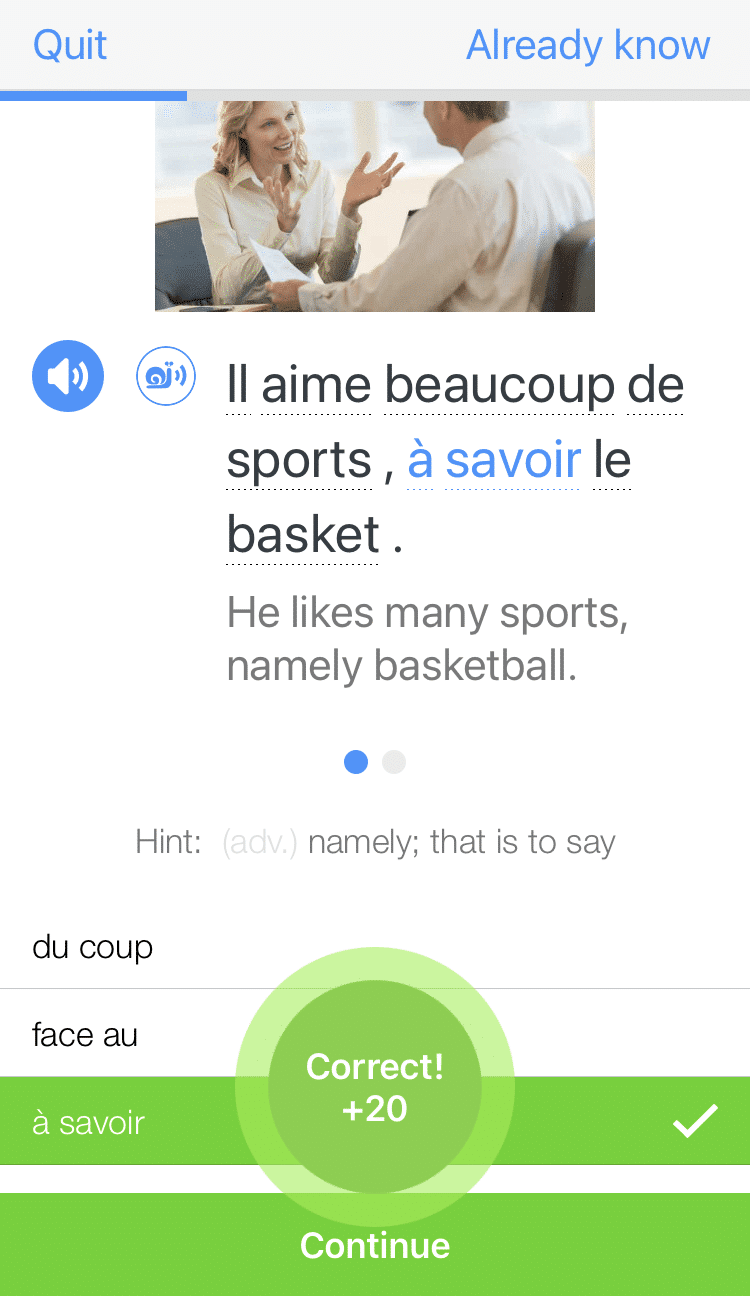
As you study, FluentU tracks the vocabulary that you’re learning and uses this information to give you a 100% personalized experience.
It gives you extra practice with difficult words—and reminds you when it’s time to review what you’ve learned.
Start using the FluentU website on your computer or tablet or, better yet, download the FluentU app from the iTunes or Google Play store. Click here to take advantage of our current sale! (Expires at the end of this month.)